
This working group draws upon the strengths of scholars across the Rutgers campuses and across disciplinary boundaries whose work entails an investigation of racial difference in the early modern world, read variously as somatic, religious, national, and ethnic difference, and as mutually constitutive with social hierarchies such as class and caste. In thinking through connections between early modern racial formations and our contemporary historical moment, this working group will also seek to communicate the relevance of early modern studies to our debates about race and racism in the world today. Fostering publications, projects, and public events including interdisciplinary symposia on race, this working group aims to promote and build on the energy and radical thinking of recent scholarship on race in the early modern world, bringing it to a wider audience, facilitating interdisciplinary work and anticipating new directions in the field. It is our intention that participants will engage the topic of race and the early modern world from a wide variety of theoretical, critical, archival, and pedagogical perspectives. Questions of interest include: How do we define race in the early modern world? To what extent do the forms and features of early modern social difference relate to modern understandings and experiences of race and racism? How do disciplinary boundaries limit our approaches to thinking and speaking about race and other forms of difference? What are the advantages and pitfalls of using critical race theory in discussions of race in the early modern world? What are our aims (aspirations) in studying the way racial difference works in the early modern world? What possibilities for teaching students about race in the early modern world emerge from an assessment of documentary, literary, material, visual and other sources?
Organizers
-
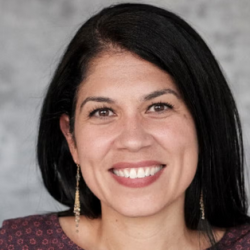
Mayte Green-Mercado
- Information
Mayte Green-Mercado is Associate Professor and RU-Newark Director of the Institute for the Study of Global Racial Justice. She received a BA in European History from the University of Puerto Rico, and a PhD from the Department of Near Eastern Languages and Civilizations at The University of Chicago, specializing in Islamic Studies. Her research focuses on medieval and early modern Mediterranean history. She teaches courses on Islamic Civilization, Islamic history in Spain and North Africa, and early modern Mediterranean history. Her courses deal with questions of religion, politics, identity, and race and ethnicity in the medieval and early modern periods. She also leads study abroad programs around the Mediterranean.
-
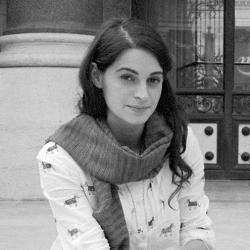
Susan Mokhberi
- Information
Susan Mokhberi (Chair) is a historian of early modern France with a focus on French contacts with the world. Her book, The Persian Mirror: Reflections of the Safavid Empire in Early Modern France (Oxford University Press, 2019), looks at the unique relationship between France and Persia in the seventeenth century, which culminated in Montesquieu’s famed Persian Letters. Using diplomatic sources, fiction, travelogues, and printed and painted images, The Persian Mirror shows how the French came to see themselves in Persia and revises our notions of orientalism and the exotic. Currently, she is working on a new project concerning the French relationship with Africa in the seventeenth century. Mokhberi has been the recipient of generous grants including a Fulbright to France and a Rutgers Global International Collaborative Research Grant. Her classes at Rutgers-Camden cover the Middle Ages, Renaissance, Enlightenment, French Revolution, and Europe’s encounters with the World.
-

Henry Turner
- Information
Henry S. Turner is Professor of English and Vice President for Academic Initiatives at Rutgers, the State University of New Jersey. He specializes in Renaissance literature and intellectual history, especially drama, philosophy, and the history of science. He is the author of The English Renaissance Stage: Geometry, Poetics, and the Practical Spatial Arts, 1580-1630 (Oxford, 2006), Shakespeare’s Double Helix (Continuum/Bloomsbury, 2008), and The Corporate Commonwealth: Pluralism and Political Fictions in England, 1516-1651 (Chicago, 2016). His articles, essays, reviews, and interviews have appeared in Annals of Science, Configurations, differences, ELH, Isis, JEMCS, Nano, postmedieval, Public Books, Renaissance Drama, Renaissance Quarterly, Shakespeare Quarterly, Shakespeare Studies, South Central Review, and The Spenser Review, as well as in a wide range of edited collections. He is currently co-writing a book with Jane Hwang Degenhardt (U-Mass, Amherst) tentatively entitled The Shakespearean Horizon: Worlds Upon Worlds in The Renaissance and Today. His is work has been supported by fellowships from the National Endowment of the Humanities, the National Humanities Center, and by a Frederick Burkhardt Fellowship from the American Council of Learned Societies for residence at the Radcliffe Institute for Advanced Study at Harvard University.